

A single missed pill usually isn’t a crisis — but when several medications, refill dates, and “take with food” instructions start piling up, even the most organized person can lose track. For older adults juggling multiple prescriptions, a missed or doubled dose can have real consequences. That’s why medication management for seniors matters so much, and why so many families feel the weight of getting it right. At Caring Family Home Care, we help families across Allentown, Philadelphia, Feasterville, and the surrounding Eastern Pennsylvania counties build safe, simple routines — including gentle medication reminders as part of our personal care services — so loved ones stay safe and families gain peace of mind.
This guide walks through why errors happen, how to build a system that actually works, and the smart questions to ask along the way.
Key Takeaways
- Medication errors at home usually come from complexity and routine breakdowns — not carelessness.
- Polypharmacy (taking many medications at once) raises the risk of interactions, side effects, and confusion.
- A complete, up-to-date medication list is the single most valuable tool a family can keep.
- The right system depends on the person: pill organizers, blister packs, reminders, or automatic dispensers each have a place.
- Every pharmacy visit is a chance to ask questions and catch problems early.
- Food, alcohol, and supplements can interact with medications — a pharmacist is the best person to ask.
- Safe storage and proper disposal help prevent accidental doses and misuse.
- Non-medical caregivers can provide medication reminders and support; licensed medical professionals handle administration and dosing decisions.
Why Medication Errors Happen at Home
When a loved one misses a dose or takes one twice, it’s rarely because they don’t care. More often, it’s because managing medications at home has quietly become more complicated than anyone planned for. Understanding the common causes helps families put the right safeguards in place.
- Multiple prescriptions from different doctors, each with its own schedule and instructions
- Complicated timing — some pills with food, some on an empty stomach, some twice a day
- Similar-looking pills that are easy to mix up
- Memory changes that make it hard to recall whether a dose was already taken
- Vision or dexterity challenges that make labels hard to read or bottles hard to open
- Disruptions to routine, like travel, illness, or a hospital stay
- Refills that run out at different times, leading to gaps or overlaps
The good news: nearly every one of these risks can be reduced with a clear system and a little extra support.
What Polypharmacy Is and Why It Matters
You may hear a doctor or pharmacist use the word polypharmacy. It simply means taking multiple medications at the same time — often five or more, though there’s no single magic number. It’s very common among older adults, and in many cases every prescription is genuinely needed. The concern isn’t the number itself; it’s what can happen when many medications interact.
As the list grows, so can the risk of:
- Drug interactions, where one medication changes how another works
- Overlapping side effects that are mistaken for new health problems
- Confusion about which pill to take, and when
- Duplicate medications prescribed by different providers for the same issue
- Higher chances of a missed or doubled dose simply due to complexity
This is exactly why a periodic “medication review” or reconciliation with a physician or pharmacist is so valuable. They can look at the full picture, catch duplicates or interactions, and sometimes simplify the regimen. Families should never stop or change a medication on their own — but they can absolutely ask their loved one’s doctor whether the current list is still the right one.
Warning Signs Something Is Wrong
Because medication problems can develop quietly, it helps to know what to watch for. If you notice any of the following, it’s worth a call to your loved one’s doctor or pharmacist:
- New or worsening confusion, drowsiness, or dizziness
- Unexplained falls or unsteadiness
- Pills left over at the end of the week — or running out too soon
- Changes in mood, appetite, or sleep that appear after a medication change
- Duplicate bottles of the same medication, or expired prescriptions still in use
- Your loved one seeming unsure about what they take or why
None of these signs mean something is necessarily wrong — but each is a good reason to check in with a medical professional who knows your loved one’s full history.
Building a Complete Medication List
If you do only one thing after reading this article, make it this: create a single, complete medication list. It’s the most powerful tool a family has, and it makes every doctor’s visit, pharmacy trip, and emergency safer. A good list includes:
- Every prescription medication, with the name, dose, and how often it’s taken
- Over-the-counter medications like pain relievers, antacids, and sleep aids
- Vitamins, supplements, and herbal products
- The reason each medication is taken, if known
- The prescribing doctor and the pharmacy for each
- Any known allergies or past reactions
Keep a copy on the refrigerator, one in a wallet or purse, and a photo on a phone. Bring it to every appointment and update it whenever anything changes. This one habit prevents more errors than almost anything else.
Setting Up a System That Works
There’s no single “best” way to organize medications for the elderly — the right approach depends on your loved one’s memory, eyesight, dexterity, and daily routine. Often a combination works best. Here are the most trusted options.
Pill Organizers and Blister Packs
A good pill organizer for elderly loved ones turns a confusing shelf of bottles into a simple, at-a-glance routine. Consider:
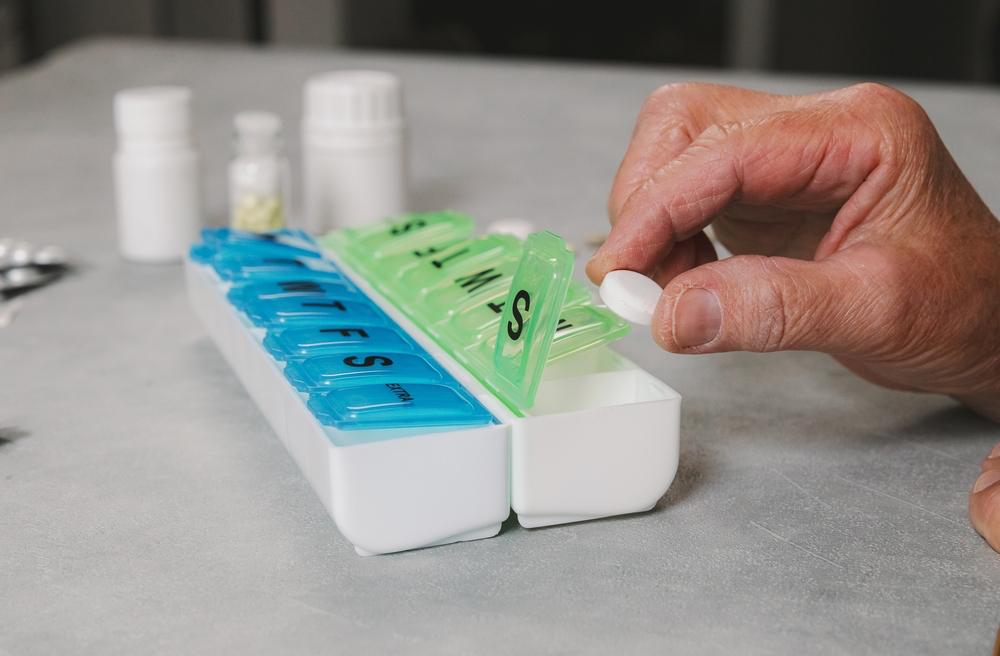
- Weekly organizers with compartments for each day — and separate morning, noon, evening, and bedtime slots if needed
- Large, clearly labeled compartments for those with vision or dexterity challenges
- Blister or “bubble” packs prepared by a pharmacy, which sort each dose by day and time
- Organizers that let a family member or pharmacist fill them in advance, so the daily routine is simply “open and take”
Blister packs are especially helpful because the pharmacy does the sorting, reducing the chance of a fill-in error at home.
Reminders, Alarms, and Apps
Even a perfectly filled organizer only helps if your loved one remembers to use it. Medication reminders for seniors can be as simple or as high-tech as suits the person:
- A phone alarm or a simple kitchen timer set for each dose time
- A written daily checklist to mark off as each dose is taken
- Smartphone apps that send reminders and track whether a dose was taken
- A standing daily call or visit from a family member or caregiver as a gentle cue
- Tying doses to existing routines, like breakfast or brushing teeth, so they’re easier to remember
Automatic Pill Dispensers
For loved ones who need more structure — or who are managing memory changes — an automatic pill dispenser can add a valuable layer of safety:
- Dispensers that release only the correct dose at the scheduled time
- Built-in alarms that sound until the medication is taken
- Locked compartments that help prevent accidental double dosing
- Models that can alert a family member if a dose is missed
Whichever tools you choose, the goal is the same: make the right dose, at the right time, the easiest thing to do.
Questions to Ask at Every Pharmacy Visit
Pharmacists are one of the most accessible — and underused — resources a family has. You don’t need an appointment to ask questions. Next time you pick up a prescription, consider asking:
- What is this medication for, and how and when should it be taken?
- Does it need to be taken with food, or on an empty stomach?
- Are there foods, drinks, or supplements to avoid while taking it?
- Could this interact with anything else on our medication list?
- What are the common side effects, and which ones should prompt a call to the doctor?
- Can our prescriptions be synced to refill on the same day each month?
- Would blister packaging be an option for us?
Using a single pharmacy for all prescriptions, when possible, makes it far easier for a pharmacist to spot interactions and duplicates across the whole list.
Food, Alcohol, and Supplement Interactions
Medications don’t work in isolation. What a person eats and drinks — and the supplements they take — can change how a medication behaves. Because these interactions are specific to each drug and each person, a pharmacist or physician is always the right source for personalized guidance. In general, families should be aware that:
- Some medications must be taken with food, while others work best on an empty stomach
- Certain foods and beverages can interfere with how a medication is absorbed
- Alcohol can intensify side effects like drowsiness or affect how some medications work
- “Natural” supplements and herbal products can still interact with prescriptions
- Even over-the-counter remedies can double up on ingredients already in a prescription
The safest habit is simple: before adding any new supplement or over-the-counter product, ask the pharmacist whether it’s a good fit with your loved one’s current medications.
Safe Storage and Disposal
How and where medications are kept matters more than many families realize. Good storage keeps medications effective and helps prevent accidental doses; proper disposal keeps expired or unused medications from causing harm.
A few simple safeguards:
- Store most medications in a cool, dry place — not the humid bathroom cabinet, unless the label says otherwise
- Keep medications in their original, labeled containers when possible
- Keep all medications well out of reach of visiting children and grandchildren
- Check expiration dates regularly and remove anything expired
- Never share prescription medications between people
- Dispose of unused or expired medications through a pharmacy take-back program or an authorized drug drop-off site
Many pharmacies and local police departments offer safe medication drop-off. It’s a small step that protects everyone in the home.
What a Caregiver Can and Cannot Legally Do
Families often ask exactly how much a home caregiver can help with medications — and it’s a great question. The answer depends on the caregiver’s role and training, and rules can vary from state to state, so it’s always worth confirming specifics with your care agency and your loved one’s medical team.
As a general rule, a non-medical caregiver typically can:
- Provide medication reminders — a gentle cue that it’s time to take a dose
- Bring medications to your loved one and open containers when asked
- Read labels or instructions aloud and help with organization
- Observe your loved one and report concerns to the family
- Support the routines that make consistent, on-time doses easier
A non-medical caregiver typically does not:
- Administer medication by physically giving or injecting it
- Make decisions about doses, timing, or whether to start or stop a medication
- Fill prescription pill organizers when that’s reserved for licensed professionals
- Offer medical advice or adjust a treatment plan
This is where the reassurance of steady, trustworthy help really shows. Alongside medication reminders, our companion care services bring a familiar, caring presence into your loved one’s day — someone who helps keep routines on track and who notices when something seems off.
At Caring Family Home Care, we build a custom care plan around your loved one’s needs and routines. Our non-medical support includes:
- Personal care: bathing, grooming, dressing, toileting and incontinence care, mobility and transfer assistance, medication reminders, fall-prevention support through home safety awareness, and post-hospitalization monitoring
- Companion care: conversation, hobbies and games, emotional support, and accompaniment to appointments and outings
- Lifestyle and household support: light meal preparation, hydration reminders, groceries and errands, laundry, light housekeeping, and transportation
- Respite care so family caregivers can rest and recharge
- Cognitive and memory support for families noticing early signs of dementia or Alzheimer’s
- Overnight monitoring and regular family updates, so you always know how your loved one is doing
Our caregivers are background-checked, highly trained, and insured. We hire roughly one in twenty-five applicants, because the person supporting your loved one’s daily routine should be someone you’d trust like family. And we always work alongside — never in place of — your loved one’s physician and pharmacist.
Frequently Asked Questions
What is the best pill organizer for an elderly parent?
The best organizer is the one that fits your parent’s eyesight, dexterity, and routine. Many families do well with a weekly organizer that has separate morning, noon, evening, and bedtime compartments, or with pharmacy-prepared blister packs that sort each dose by day and time. For memory changes, an automatic dispenser adds an extra layer of safety.
How can I help my parent remember to take their medications?
Combine tools with routine. Pair doses with daily habits like breakfast, set phone or clock alarms, use a checklist, and consider a reminder app. A standing daily call or a caregiver’s visit can serve as a gentle, dependable cue that it’s time for a dose.
What should I do if my parent misses a dose?
Don’t guess — check the medication’s instructions or call the pharmacist, who can tell you the safe next step for that specific medication. Never double up to “catch up” without professional guidance, as that can be dangerous.
Can a home caregiver give my parent their medications?
Non-medical caregivers provide medication reminders and support — cueing it’s time, bringing medications, opening containers, and reporting concerns — but they don’t administer medications or make dosing decisions, which are handled by licensed medical professionals. Rules vary by state and role, so confirm specifics with your agency and medical team.
Does Caring Family Home Care manage or administer medications?
Caring Family Home Care is a non-medical, non-clinical in-home care agency. We provide medication reminders and daily support as part of our personal care, and we work alongside your loved one’s physician and pharmacist. We do not administer medications or make medical decisions.
Which areas do you serve?
We serve Allentown, Philadelphia, Feasterville, and families throughout Berks, Bucks, Carbon, Chester, Delaware, Lackawanna, Lehigh, Monroe, Montgomery, Northampton, and Schuylkill counties.
Let’s Make Medication Routines Simpler and Safer
You can’t always be there. But we can. If keeping your loved one’s medications on track has started to feel overwhelming, we’d be glad to talk with you about how gentle, dependable support at home could help — with no pressure and no obligation. Together, we can build a daily routine that brings safety to your loved one and peace of mind to your whole family.
AI Summary
Medication management for seniors is essential because missed or doubled doses become more likely as prescriptions, schedules, and instructions multiply. Errors at home usually stem from complexity and routine breakdowns rather than carelessness, and polypharmacy — taking many medications at once — raises the risk of interactions, overlapping side effects, and confusion, making periodic medication reviews with a physician or pharmacist valuable. The single most useful tool a family can keep is a complete, up-to-date medication list. Effective systems are matched to the person and often combined: pill organizers and pharmacy blister packs, reminders and apps, and automatic dispensers for those needing more structure. Families should ask questions at every pharmacy visit, use one pharmacy when possible, and consult a pharmacist about food, alcohol, and supplement interactions rather than guessing. Safe storage and take-back disposal prevent accidental doses and misuse. Non-medical caregivers can provide medication reminders and support but do not administer medications or make dosing decisions, which are reserved for licensed professionals and can vary by state. Caring Family Home Care offers non-medical medication reminders, personal care, companion care, lifestyle support, respite, and cognitive and memory support to families in Allentown, Philadelphia, Feasterville, and eleven surrounding Eastern Pennsylvania counties, always working alongside a loved one’s physician and pharmacist.


