

Living at home in old age without caregiver support provides independence, but it also carries risks. Every year, many elderly people suffer injuries from falls, which have a significant impact on their health. The summer heat can also be a serious challenge. Therefore, a simple list of safety rules helps protect the elderly and gives their families peace of mind.
Why Home Safety Matters for Aging Adults
Don’t underestimate home hazards for elderly people. Ensuring safety in the home makes life more comfortable and peaceful for seniors. Take care of all aspects to avoid unpleasant situations.
Room-by-Room Home Safety Guide
A safety checklist for seniors helps identify and eliminate risks in the home or care facility. It covers key areas – the bathroom, kitchen, and living room, and makes them safe for everyday use. This tool simplifies the work of caregivers and medical staff, ensuring constant protection and comfort for seniors.
Living Room and Common Areas Safety
Arrange furniture so that walkways are clear, and avoid sharp corners. Use sturdy chairs with armrests. Secure wires along the walls. Keep important items close at hand.
Bathroom Safety Modifications
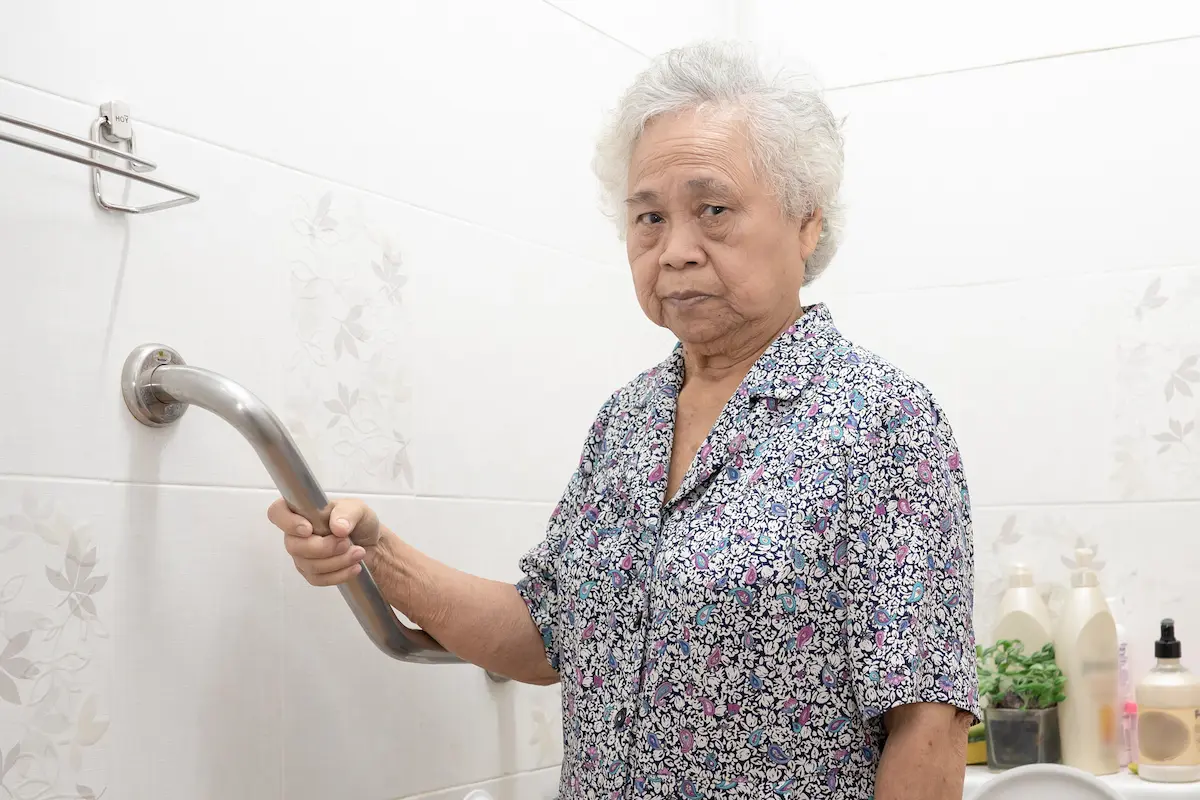
The bathroom often becomes a high-risk area for older people. Most falls at home happen here, so think about safety measures in advance:
- handrails next to the toilet and in the shower or bathtub area;
- non-slip mats inside and outside;
- a comfortable shower chair for stability;
- a raised toilet seat for ease of movement;
- bright lighting and good ventilation.
It will make the space safer and more comfortable for everyday use.
Kitchen Safety Essentials
Keep necessary items at a convenient height; do not use chairs or ladders. Choose appliances with an auto-shut-off feature. Ensure that floors are dry. Label food and medicine so that nothing gets mixed up.
Bedroom Safety Setup
In the bedroom, the bed should be high enough so that when sitting, your feet can touch the floor firmly. A lamp or light switch should be nearby to avoid having to move around in the dark. Side rails on the bed provide additional support and reduce the risk of falls during sleep. It is a good idea to keep a flashlight nearby, as it will come in handy in the event of a power outage. All of these simple modifications help adapt the space for people as they age, making it safer and more comfortable.
Stairways and Hallways
Install sturdy handrails on both sides of the stairs. Make the edges of the steps visible with bright tape. Light the stairs and corridors, and remove any unnecessary items. For people with limited mobility, use lifts to move safely between floors. It is best to always have an assistant nearby.
Entryways and Outdoor Spaces
Ensure that paths to the house are level and clear, free of ice and unnecessary objects, reducing the risk of falls. All doors and windows should have sturdy locks that are easy to open. For added security, you can install a door peephole or video surveillance to monitor visitors as they arrive.
Essential Fall Prevention Strategies
Conduct a senior home safety assessment. It’s easy to do, but it’s essential. It will allow you to get rid of any items that could cause harm.
Removing Tripping Hazards
A responsible approach to safety is the best solution. To ensure safety, please refer to the table below.
| Potential Tripping Hazard | Solution |
| Items scattered on the floor | Store items in boxes or on shelves |
| Long cables and wires | Secure them along walls or hide them in channels |
| Poor lighting | Install bright lamps and night lights |
| Slippery surfaces | Wipe up spills immediately and use non-slip coverings |
Improving Lighting Throughout the Home
Make sure all rooms are well-lit, especially stairways, hallways, and entrances. Place night lights in bathrooms and passageways to reduce the risk of falls. In places where it is difficult to reach the light switch, such as in a storage room or closet, it is convenient to use lamps with motion sensors.
Installing Grab Bars and Handrails
Installing grab bars and handrails is one of the most effective ways to improve safety at home for older adults. These supports provide stability when moving around, especially in bathrooms, staircases, and hallways.
Choosing the Right Footwear and Mobility Aids
Footwear should have non-slip soles, provide support, and be comfortable without being too tight. High heels and loose slippers should be avoided as they increase the risk of injury. Mobility aids such as canes, walkers, or scooters should be selected individually and adjusted to the user’s height.
Emergency Preparedness and Safety Equipment
Emergencies always come unexpectedly. However, preparedness reduces their danger. An action plan and simple fall prevention tips for elderly help protect older people and keep them safe.
Medical Alert Systems and Emergency Contacts
Staying connected is important for the safety and peace of mind of older adults. It helps them stay informed, quickly call for help, and keep in touch with loved ones. Small useful items for the home:
- flashlight with spare batteries;
- portable charger or external battery;
- list of family and care team phone numbers;
- battery-powered radio for emergency alerts.
These solutions are part of aging in place home modifications, making life at home safer and more comfortable.
Smoke Detectors, Carbon Monoxide Alarms, and Fire Safety
Smoke detectors and carbon monoxide alarms help you spot danger early and keep your family safe. You should put them in every room and check the batteries regularly to make sure they’re working properly. Keep a fire extinguisher handy.
Creating an Emergency Evacuation Plan
If you use hearing aids or mobility aids, it is important to have a supply on hand. Keep extra batteries, a spare cane or walker, replacement parts, and simple tools for minor repairs.
When to Consider a Professional Home Safety Assessment
Caregivers are skilled at identifying hazardous situations and assist in making the home safe and comfortable. They support seniors’ mobility, offer simple advice, and are always available to provide peace of mind. If the family is unable to devote sufficient time, it is advisable to arrange home care.
FAQ
Why is it essential to regularly check the lighting in your home?
Good lighting reduces the risk of falls, helps with spatial orientation, and creates a safe environment for older adults in their daily lives.
How should medications be stored properly?
Medications should be stored in one place, with clear labels and a schedule for taking them, to avoid mistakes and ensure timely use.
Should handrails be installed in the bathroom?
Yes, handrails help maintain balance, reduce the likelihood of falls, and make using the bathroom safe and comfortable for older family members.
Which rugs are dangerous?
Loose rugs or slippery runners can cause falls. It is better to use rugs with non-slip backing or remove them altogether.
How can I check the safety of electrical appliances?
Regularly inspect wires and outlets, avoid overloading the electrical system, and use extension cords with protection to reduce the risk of fire and electrical injury.


